Here you can read the latest news from Fumex.
5 Common Design Mistakes in Laboratory Extraction Systems
Capture Performance: Why Airflow Alone Does Not Determine Effective Extraction

Pressure Drop and Energy Use in Laboratory Extraction Systems
How to Select the Right Extraction Arm for Your Laboratory
“A little better every day” – Anders Hedlund reflects on his journey with Fumex

Meet Movex at I2SL 2026 in Boston – Booth 311

What EX means — and why it matters in extraction
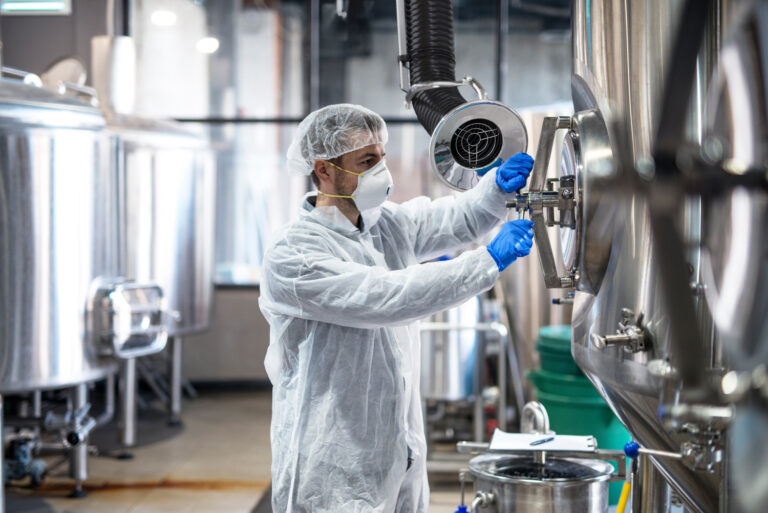
Why you need industrial source extraction
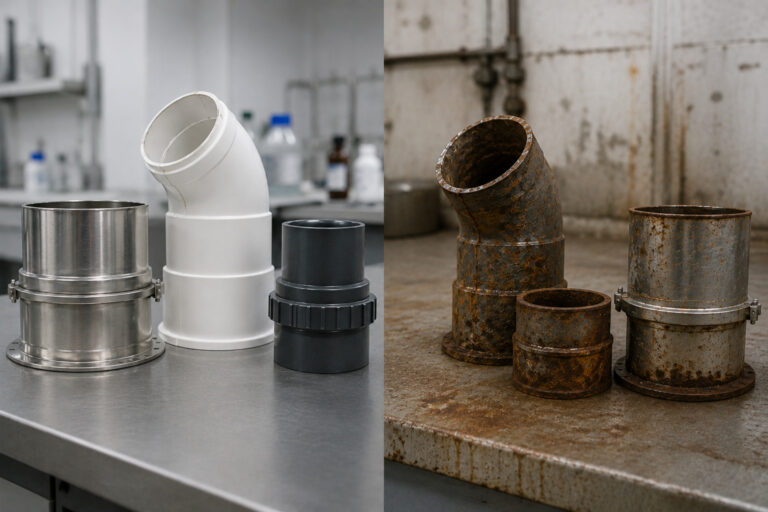
Why material selection matters in corrosive environments
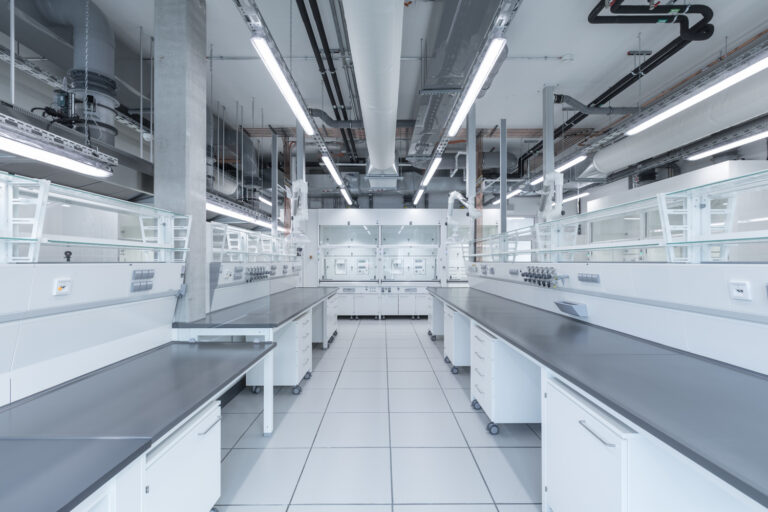
Source Extraction in Laboratories: Precision Where It Matters
Opening hours during the summer

New at Fumex GmbH – Jeaneth is already an important part of the team
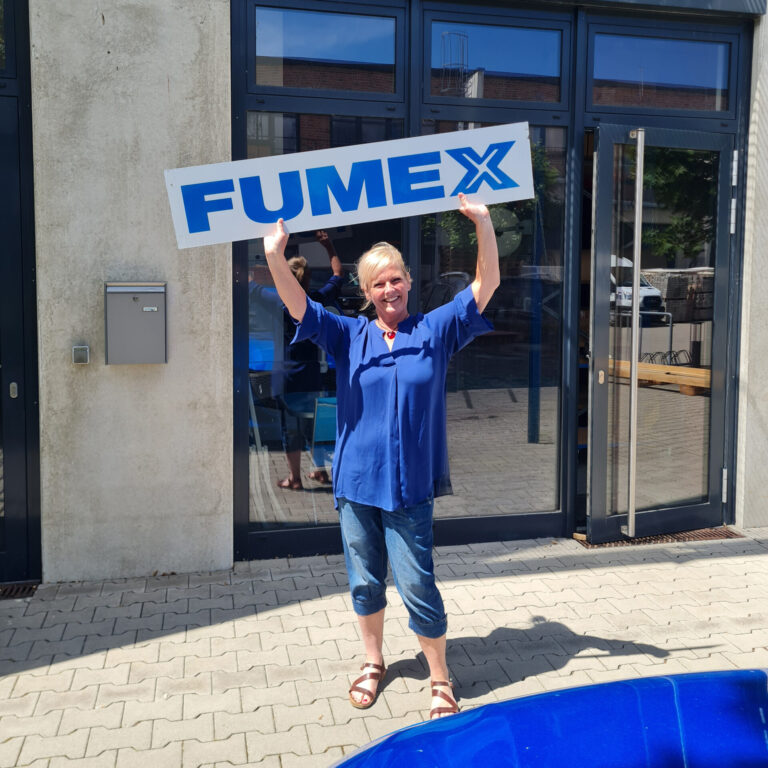
When the right expertise meets the right idea: the Fumex augmented reality app

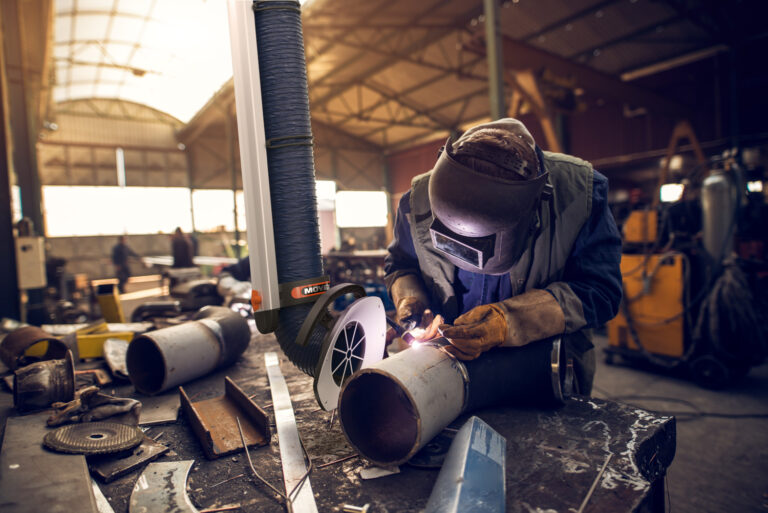
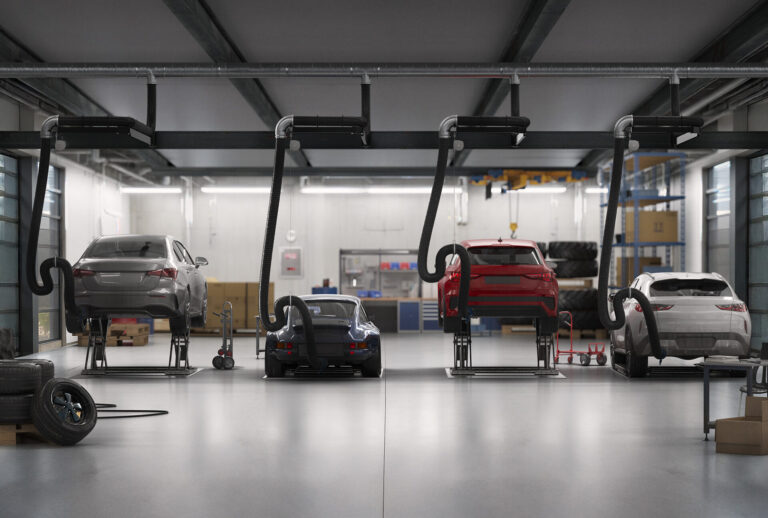
Why local extraction is essential for vehicle exhaust and welding fumes
Welcome to the open house on Saturday, November 9

Jussi Minkkinen is Fumex’s new Production Manager – “I am driven by continuous improvement”

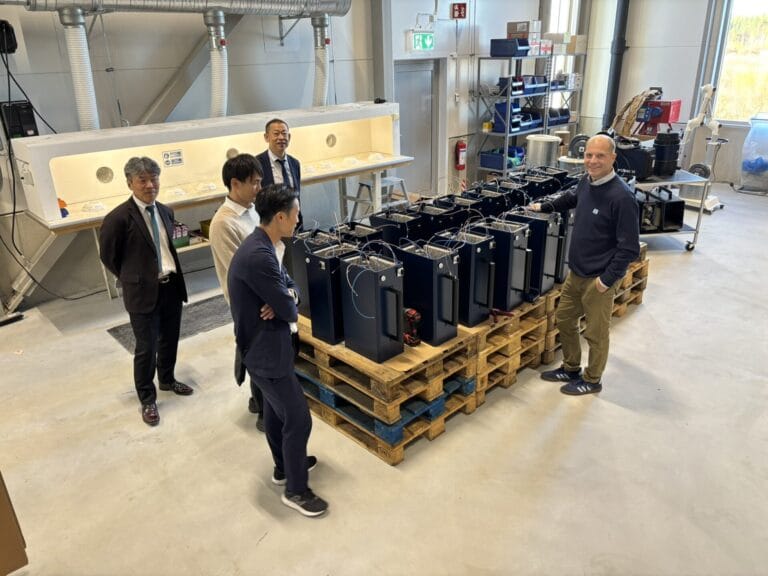
Japanese Dalton visits Fumex – focus on future cooperation
Introducing Mike Murphy – Movex’s new National Sales Manager

Opening ceremony for our new headquarters – See the pictures from the event!

Introducing Kenny Stenberg – ISO Coordinator at our parent company Fumex

Increasing the knowledge of environmental and social sustainability

Anders Hedlund takes the floor – “Trust me, there is a lot going on at Movex!”
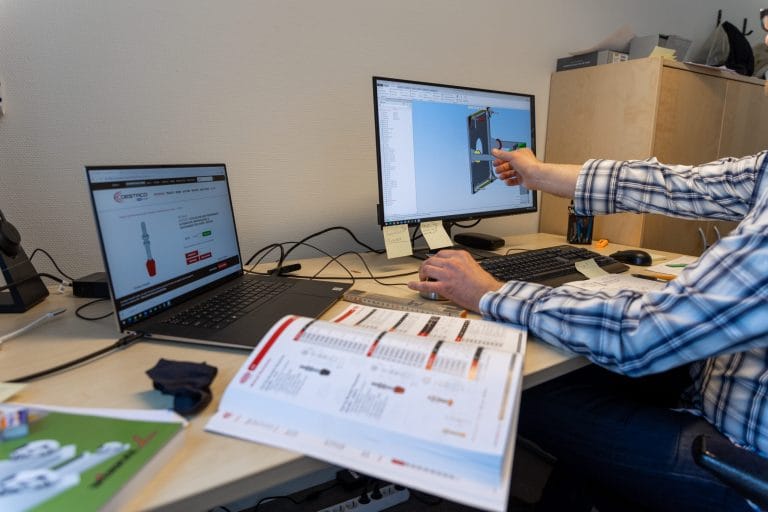
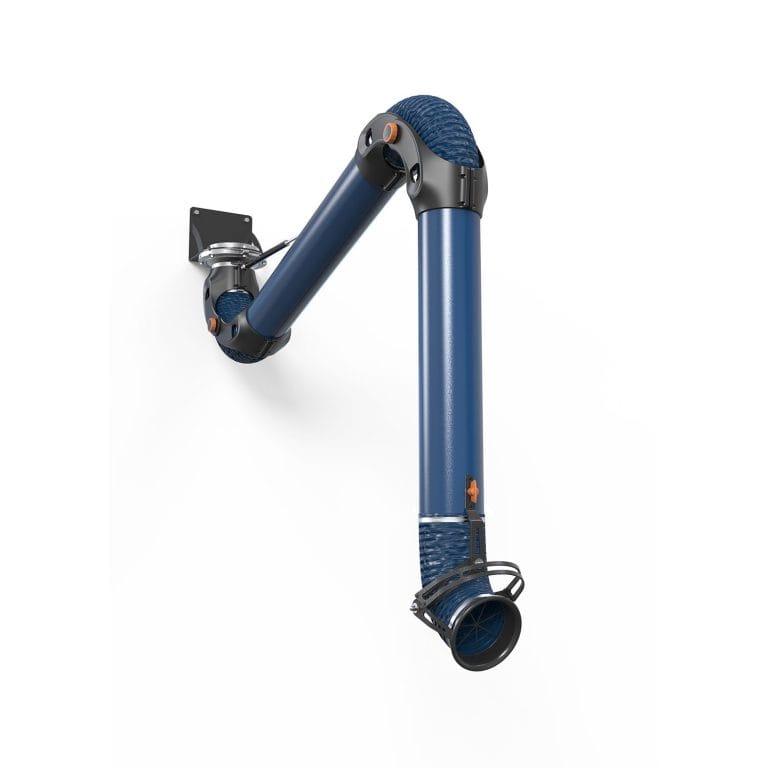
PRX – An effective “heavy duty” extraction arm
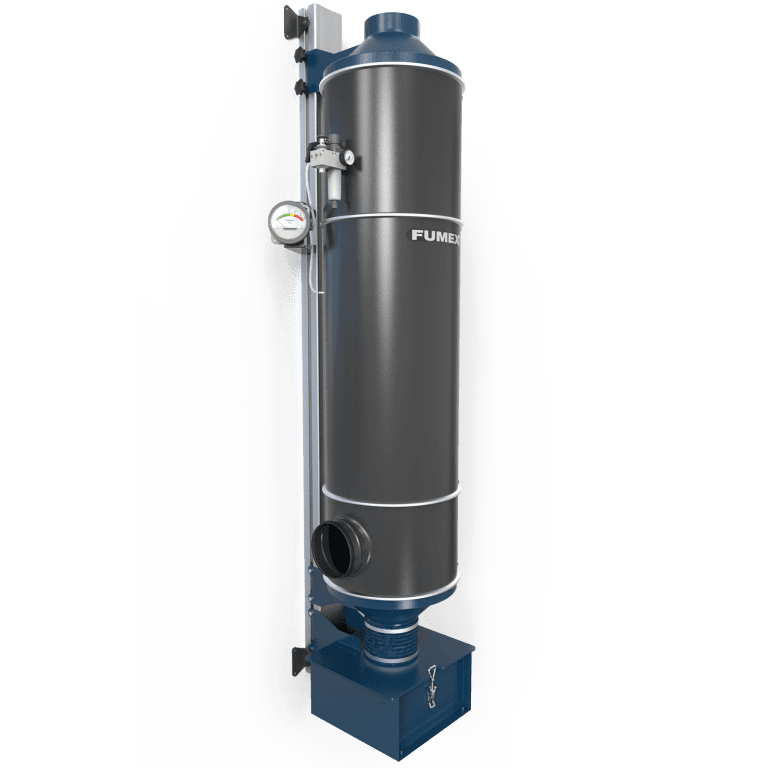
CV – Modular filter for both particles and gas
Materials Matter: Choosing Extraction Equipment for Different Laboratory Processes
Selecting laboratory extraction equipment is not only about airflow, reach and hood design. The material moving through the extraction system also matters.
A configuration suitable for general laboratory vapors may not be the right choice for highly corrosive contaminants. Conductive equipment may be required where electrostatic discharge is a concern. High-temperature processes need materials that can withstand heat, while controlled environments may place greater emphasis on surface finish and cleanability.
OSHA’s Laboratory Standard recognizes that hazardous chemicals can present very different physical hazards, including flammability, explosivity and corrosivity.
That is why material selection should begin with a simple question: What will actually be passing through the extraction system?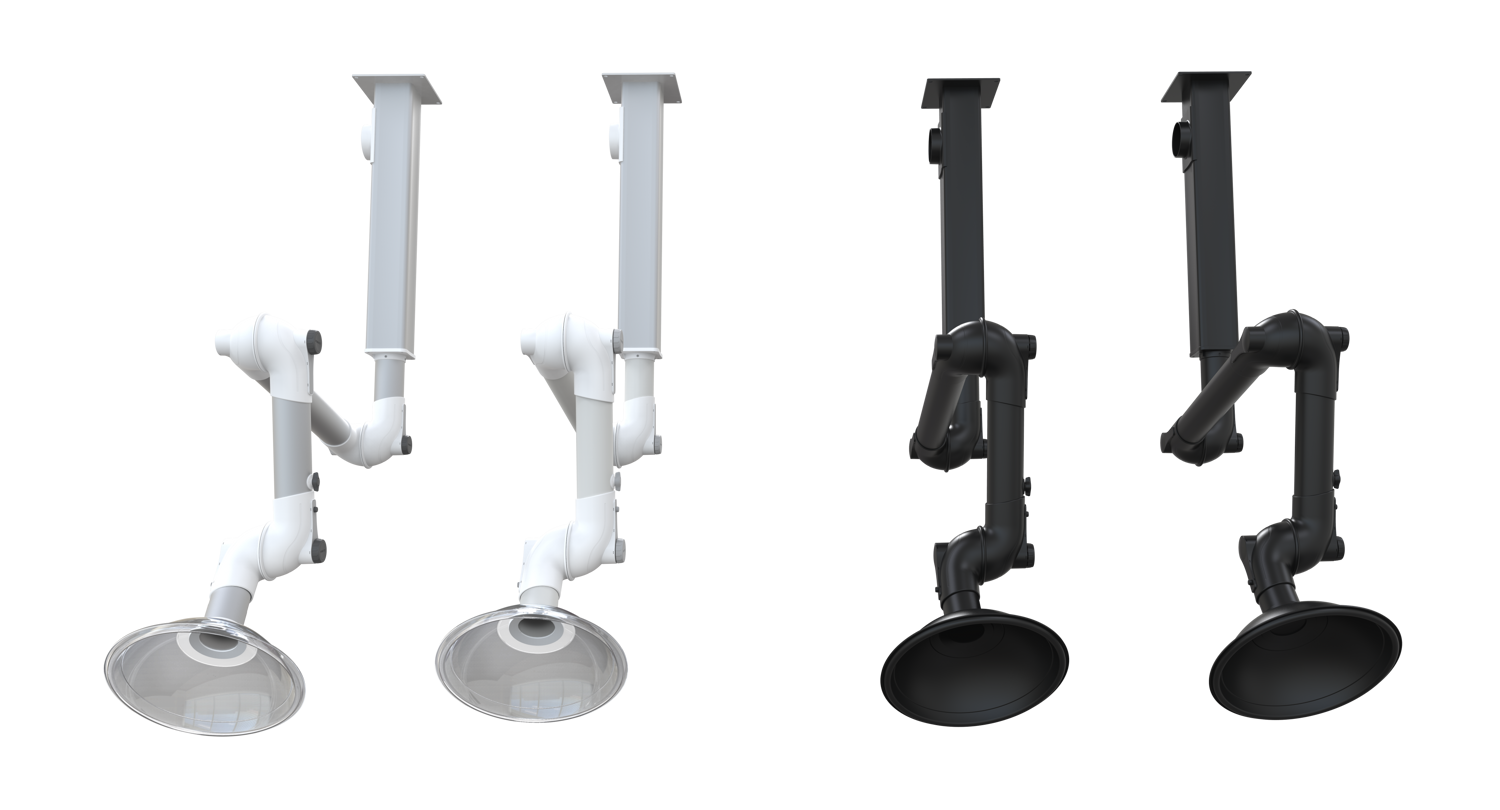
Start with the contaminant — not the product
It can be tempting to classify an application simply as “laboratory extraction.” But laboratories handle a very wide range of substances and processes.
Before selecting the equipment, consider:
- What substances are being extracted?
- Are they gases, vapors, fumes, mists or particles?
- Are they corrosive?
- What concentrations can occur?
- What temperature enters the extraction system?
- Are flammable gases, vapors or combustible dusts involved?
- Does the process require ESD control?
- Are there cleanroom or hygiene requirements?
- Which parts of the system will come into contact with the extracted air?
These questions can lead to very different material choices even when the workstation itself looks similar.
General laboratory applications: ME STD
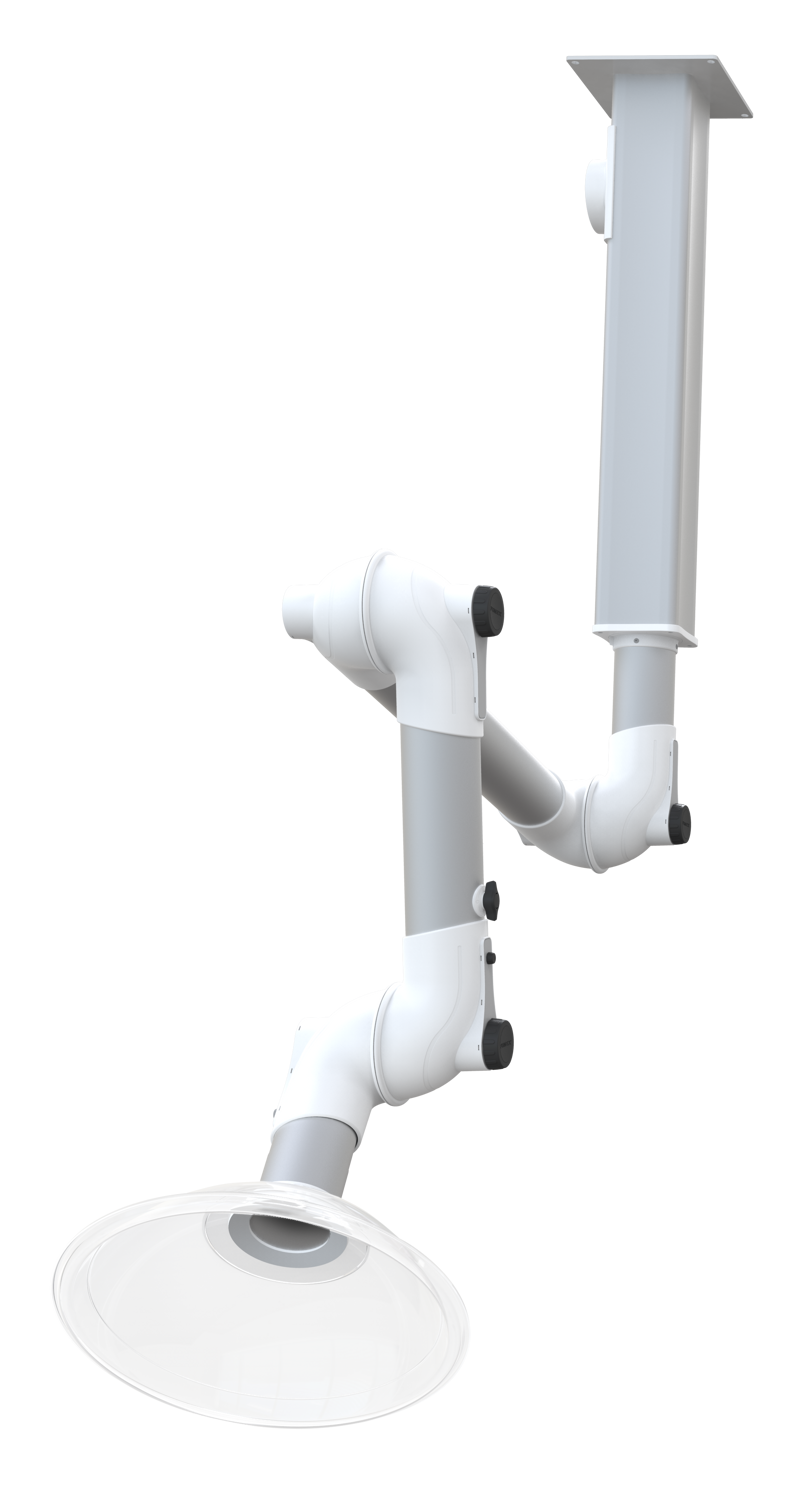
For a broad range of laboratory applications, ME STD is our general-purpose configuration.
It uses thin-wall anodized aluminum tubes together with polypropylene joints and is available in 2, 3 and 4 in. diameters.
The combination keeps the arm lightweight and easy to position while providing a practical material configuration for many common laboratory applications.
But “general purpose” does not mean universal.
If the extracted contaminant places greater demands on chemical resistance, temperature or electrical properties, another ME configuration may be more appropriate.
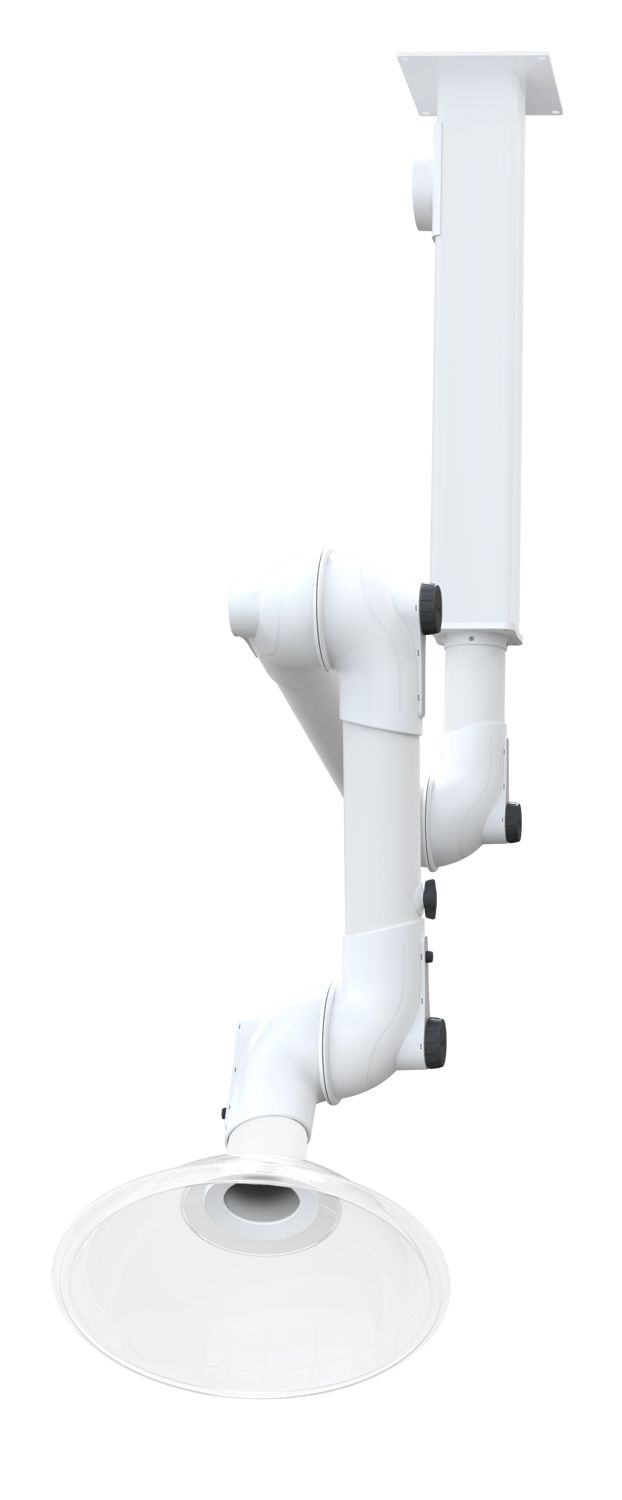
Corrosive contaminants: ME PP
Processes involving highly corrosive airborne contaminants require more attention to the materials exposed to the airstream.
For these applications, ME PP replaces the standard aluminum tubes with polypropylene tubes. The joints are also polypropylene, while metal components that come into contact with the airflow are made of stainless steel.
Our ME product documentation specifically positions ME PP for highly corrosive airborne contaminants in applications including laboratories and the pharmaceutical and chemical industries.
Polypropylene can provide useful corrosion resistance in many chemical environments, but this should not be interpreted as universal chemical compatibility.
The actual substance, concentration, temperature and exposure conditions still need to be considered.
In other words:
“Made from polypropylene” does not automatically mean “suitable for every chemical.”
For demanding applications, the material compatibility of the complete extraction path should be confirmed for the specific process.
Think beyond the tubes and joints
An extraction arm contains more than its main tubes.
Depending on the configuration, the extracted air can also come into contact with:
- Hood or suction nozzle
- Joints
- Damper components
- Hose
- Fasteners
- Duct connections
- Downstream ductwork
- Fan
- Filtration equipment
This becomes especially important with aggressive chemicals.
Choosing a corrosion-resistant arm while connecting it to downstream components that are not suitable for the same contaminant does not create a corrosion-resistant system.
The assessment needs to continue from the source through the complete airflow path.
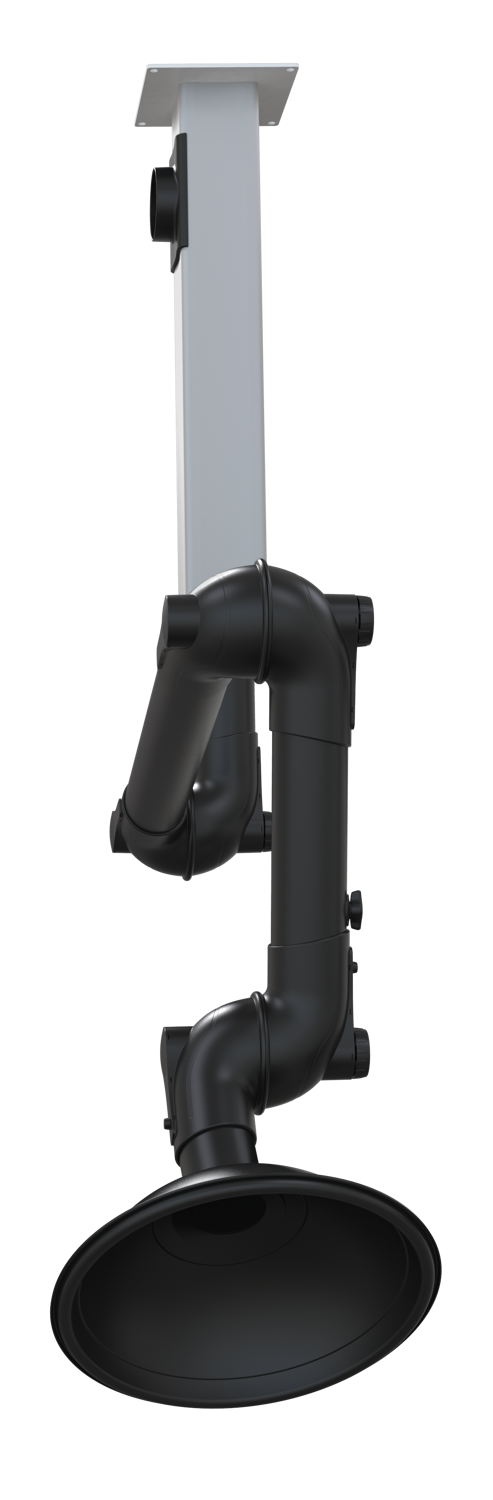
ESD-sensitive work: ME ESD
Chemical compatibility is not the only reason to change material configuration.
Some laboratories handle electronics, sensitive components or processes where electrostatic discharge needs to be controlled.
For these applications, ME ESD uses conductive components to make the extraction arm electrically conductive.
Depending on the diameter, the configuration uses conductive polypropylene or aluminum tubing with grounding connections. ME ESD is type approved according to EN 61340-5-1.
The purpose here is different from corrosion resistance.
The material and grounding arrangement are selected to help control electrostatic charge as part of an ESD-controlled environment.
This illustrates an important principle: The correct material is determined by the hazard you are trying to control.
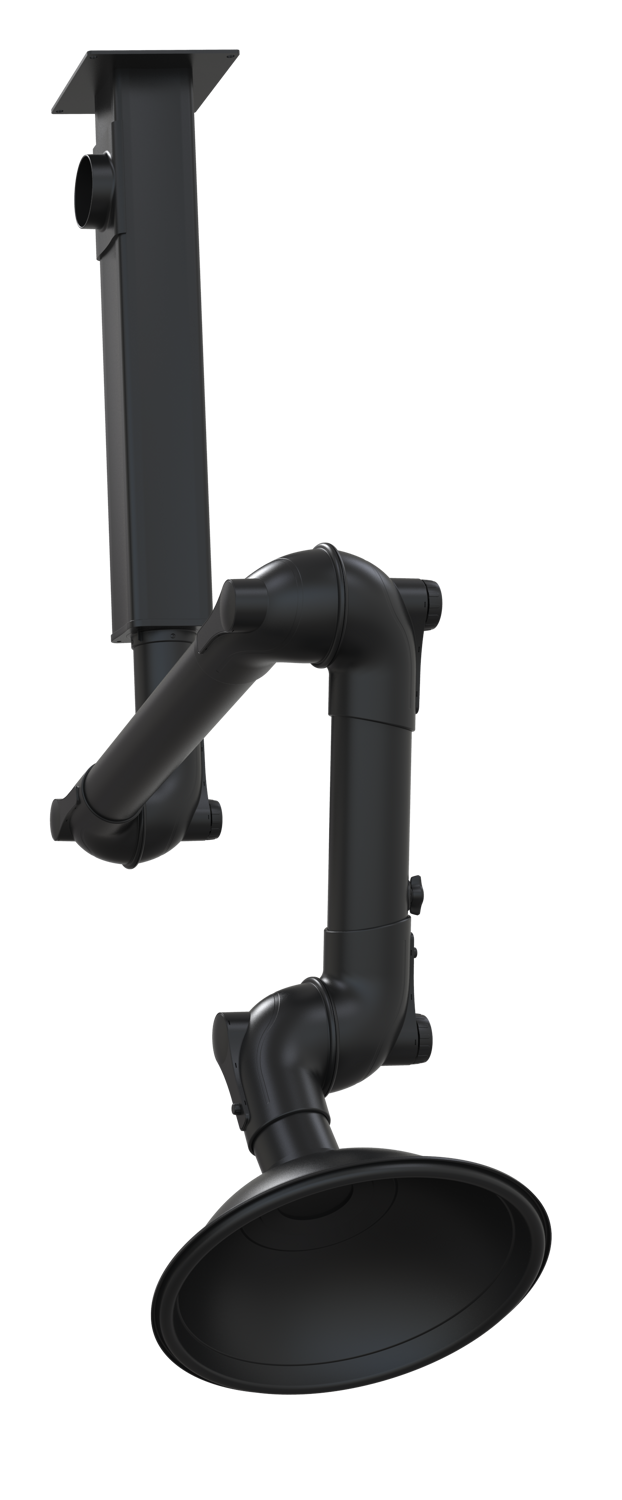
Explosive atmospheres: ME EX
Where flammable gases, vapors or combustible dusts may create an explosive atmosphere, equipment selection becomes a hazardous-area issue rather than simply a question of chemical resistance.
Our ME EX configuration — identified as ME ATEX in the current product sheet — uses:
- Conductive polypropylene joints and tubes
- Stainless steel metal parts exposed to the airflow
- Conductive coating on load-bearing metal components
- Grounding provisions
The product is designed in accordance with its stated ATEX classification for gases and dust.
For a U.S. installation, however, the hazardous location must be assessed according to the requirements that apply to that project. OSHA requires hazardous locations to be classified based on the specific flammable gases, vapors, liquids or combustible dusts present and the likelihood of a hazardous concentration occurring. Equipment must then be appropriate for that classified location.
So an important distinction for the Movex audience is: ATEX classification and U.S. hazardous-location classification are not simply interchangeable labels. For U.S. projects involving potentially explosive atmospheres, the complete application and applicable classification should be reviewed before equipment is specified.
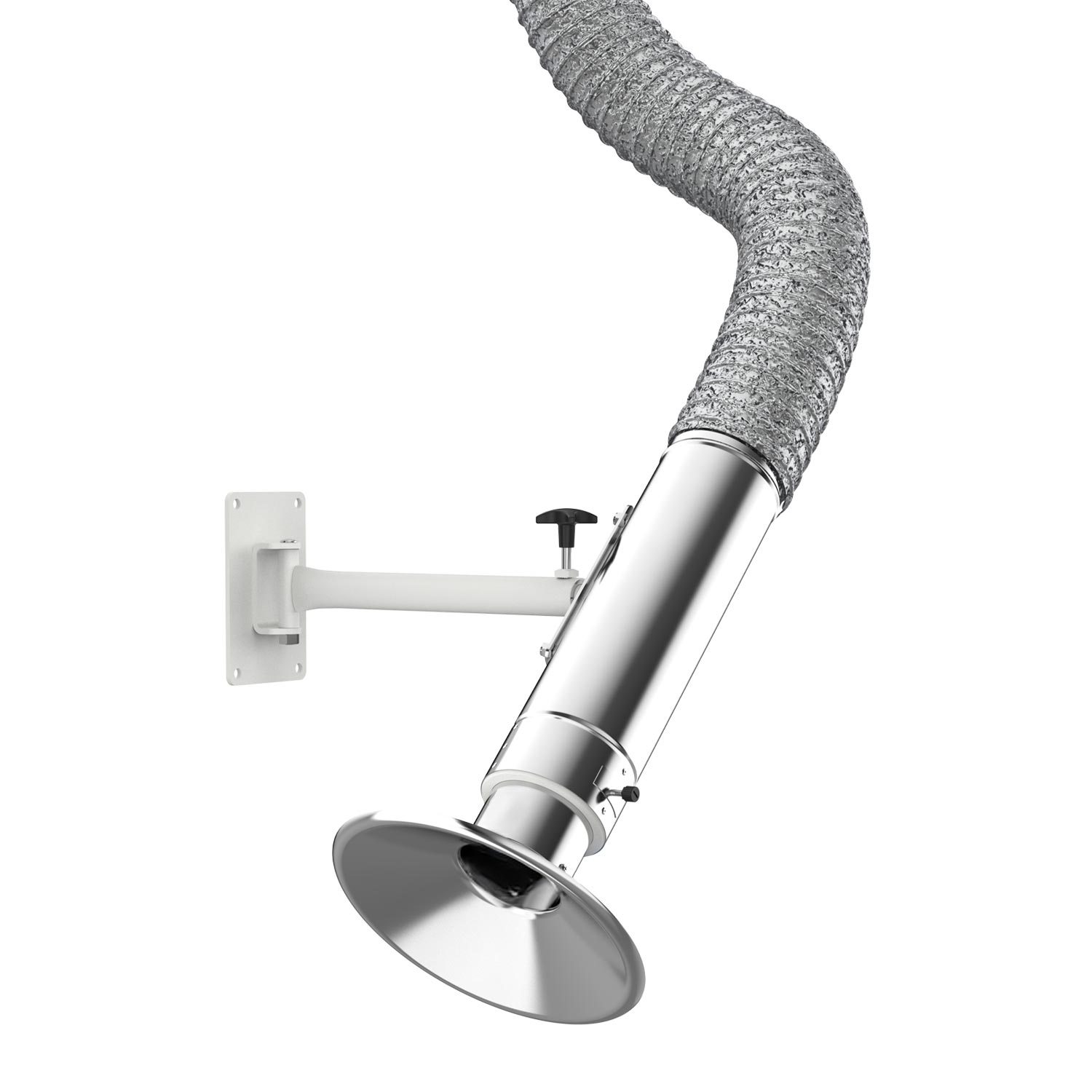
High temperature changes the material requirements
Temperature presents a different type of challenge.
A laboratory process may be chemically straightforward while producing exhaust air hot enough to damage a standard extraction arm, hose or downstream component.
That is where MEX AA comes in.
MEX AA was developed for hot airborne contaminants, particularly applications such as atomic absorption spectrophotometers.
All components exposed directly to the hot contaminants are manufactured from 316L stainless steel, and the supplied flexible hose is rated up to 482°F.
The sliding components use PTFE with a stated temperature range up to 572°F.
MEX AA also has approximately 18 in. of telescopic movement, allowing the hood to be positioned around the process while keeping the high-temperature components suited to the application.
High temperature does not stop at the hood
High-temperature extraction also demonstrates why the complete airflow path matters.
Even if the extraction arm can tolerate the process temperature, equipment farther downstream may have a lower allowable temperature.
For MEX AA applications, our product documentation therefore describes using surrounding room air to mix with the hot process air and reduce exhaust temperature downstream.
For example, the product sheet illustrates a case where approximately:
- 20 CFM at 1,800°F comes from the atomic absorption equipment
- 150 CFM of approximately 70°F room air is entrained
- The resulting extracted airflow is approximately 170 CFM at 200°F
This is a useful example of why extraction-system design cannot stop at the material of the hood.
The temperature reaching the hose, ductwork and fan also needs to remain within their respective limits.
Cleanability can be a material requirement too
Not every demanding laboratory environment involves corrosive chemicals or high temperatures.
Pharmaceutical and controlled environments may place significant emphasis on cleanability and surface finish.
For these applications, PSS takes a very different approach.
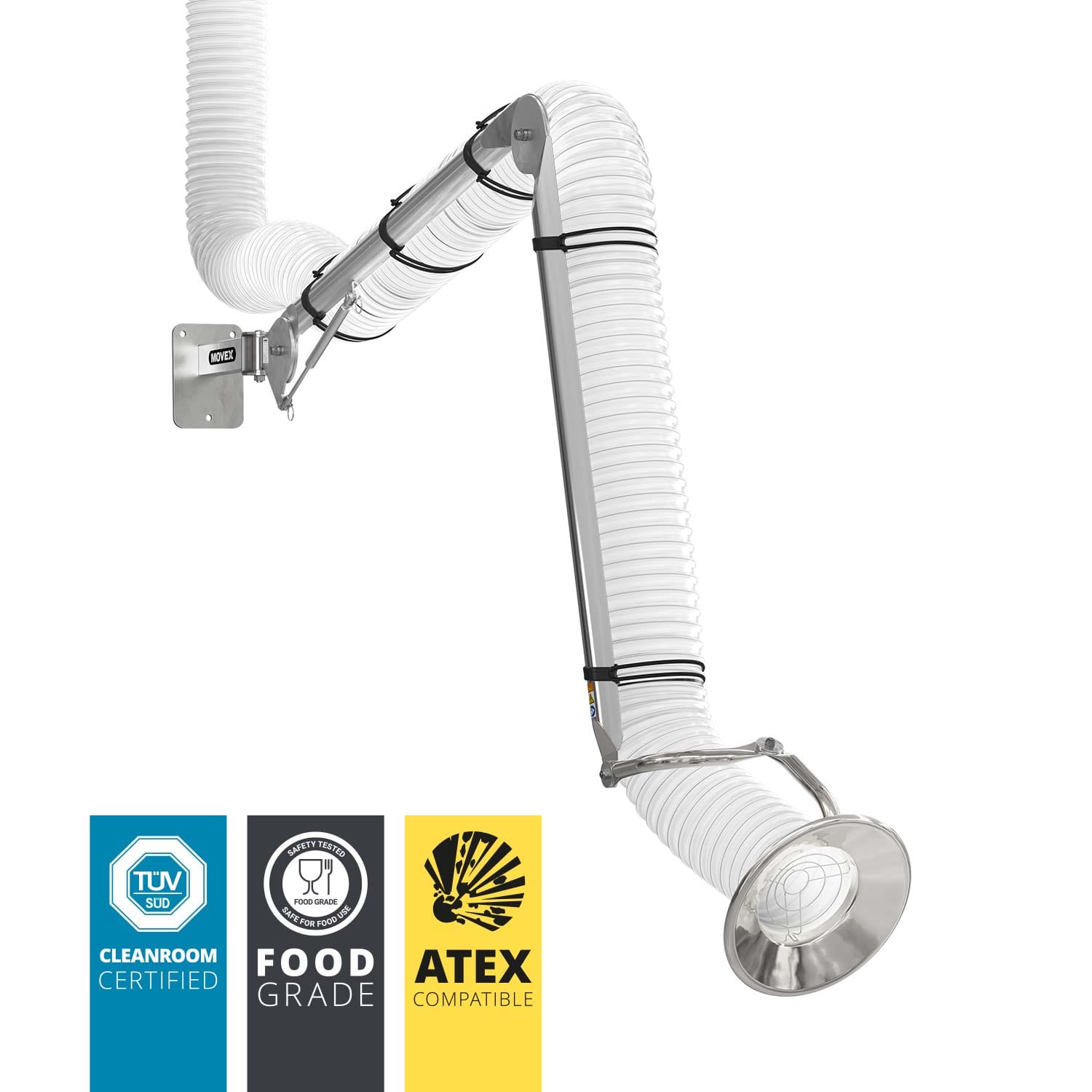
The structural components and hood are manufactured from high-gloss polished, acid-resistant 316 stainless steel, with a specified surface roughness of Ra ≤ 0.6.
The construction also includes:
- Fully sealed support profiles
- Few components around the airflow
- Detachable protective grille
- Quick hose connections
- Stainless steel gas spring
- Antistatic hose
- Components selected for easier cleaning
PSS is third-party cleanroom tested and certified to ISO Class 6 according to ISO 14644-1, with the certificate limited to air cleanliness by particle concentration.
For the U.S. version, PSS is available in 4, 5, 6 and 8 in. diameters and approximately 7, 10 and 14 ft lengths.
Stainless steel is not automatically the answer to everything
It is also worth avoiding the opposite assumption:
If a demanding application exists, simply choose stainless steel.
That is too simplistic.
Different stainless grades, plastics, elastomers and hose materials have different resistance to chemicals and temperatures. Surface finish may matter for hygiene applications, while conductivity may be more important for another process.
A polished stainless extraction arm designed for cleanability is solving a different problem than a polypropylene arm designed for corrosive airborne contaminants.
Likewise, MEX AA uses stainless steel primarily because the equipment is designed around a high-temperature process.
Material selection should therefore follow the application — not a hierarchy where one material is assumed to be universally “better.”
Four different ME configurations — four different needs
The ME family is a good example of this principle.
| Configuration | Primary consideration | Main construction |
|---|---|---|
| ME STD | General laboratory extraction | Anodized aluminum tubes + PP joints |
| ME PP | Highly corrosive airborne contaminants | PP tubes + PP joints + stainless parts in the airflow |
| ME ESD | ESD-controlled environments | Conductive components + grounding |
| ME EX | Potentially explosive atmospheres | Conductive PP + stainless airflow components + grounding |
The extraction-arm geometry remains familiar across the range.
What changes is the configuration around the environmental requirement.
That allows the material choice to be made around the application without abandoning the ergonomics and low-pressure-drop principles of the ME platform.
Start with the Safety Data Sheet — but do not stop there
For a chemical process, the Safety Data Sheet is an important starting point for understanding hazards such as corrosivity, flammability and exposure concerns.
But specifying extraction equipment may require additional information that the SDS does not provide directly.
You may still need to know:
- Actual concentration in the exhaust
- Process temperature
- Mixtures of several chemicals
- Frequency and duration of exposure
- Cleaning chemicals used on the equipment
- Whether condensation can occur
- Whether solids or droplets are transported with the vapor
- Hazardous-location requirements
These conditions can materially change the suitability of a material.
If there is uncertainty, compatibility should be confirmed before the system is specified.
Choose the complete configuration around the process
The goal is not to find one extraction arm material that works everywhere.
It is to match the equipment to the actual conditions.
For many laboratories, ME STD is an appropriate starting point.
Processes involving highly corrosive airborne contaminants may point toward ME PP. ESD-controlled work may require ME ESD, while applications involving explosive atmospheres require appropriate hazardous-area equipment such as ME EX, subject to the requirements applicable to the installation.
For high-temperature applications, MEX AA introduces stainless steel and heat-resistant components specifically designed around hot exhaust.
And where cleanability and controlled environments are the priority, PSS provides a polished stainless steel solution designed around those requirements.
The first question remains the same: What are you extracting — and what will that contaminant encounter on its way through the system?
Need help selecting the right material or configuration?
Tell us about the substance, process temperature and laboratory environment. We can help you identify the extraction configuration that fits the application.