Here you can read the latest news from Fumex.
Materials Matter: Choosing Extraction Equipment for Different Laboratory Processes
5 Common Design Mistakes in Laboratory Extraction Systems
Capture Performance: Why Airflow Alone Does Not Determine Effective Extraction
Pressure Drop and Energy Use in Laboratory Extraction Systems
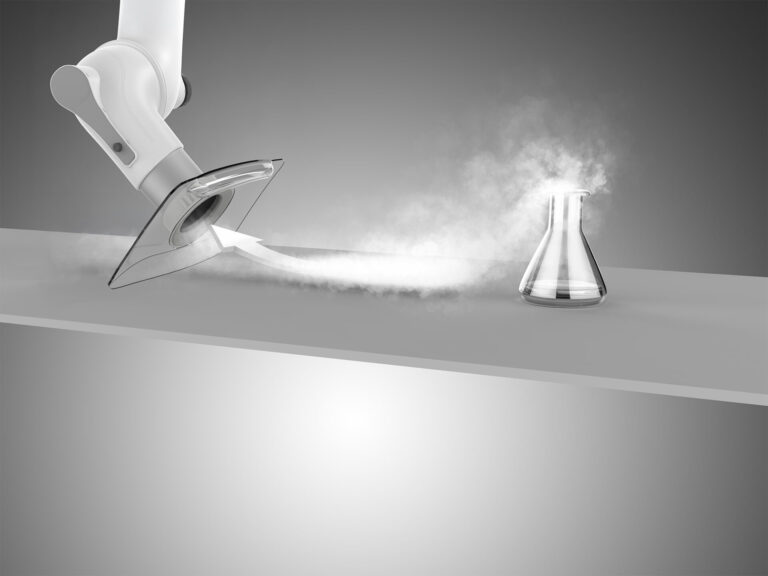
How to Select the Right Extraction Arm for Your Laboratory
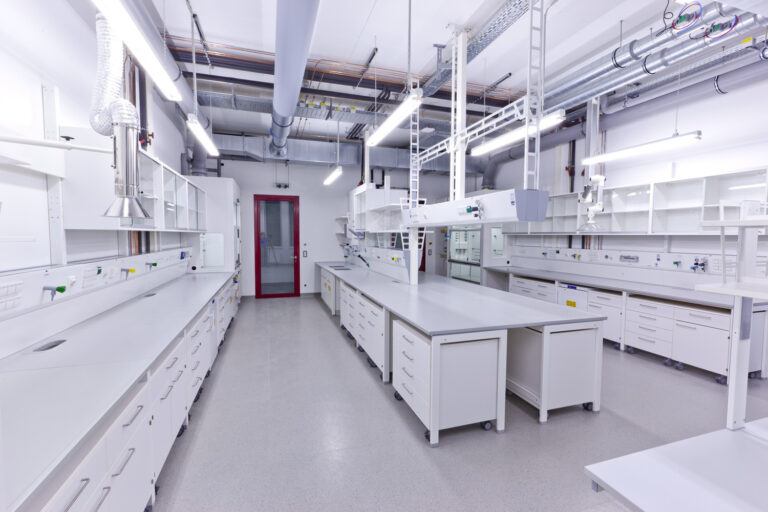
“A little better every day” – Anders Hedlund reflects on his journey with Fumex
Meet Movex at I2SL 2026 in Boston – Booth 311
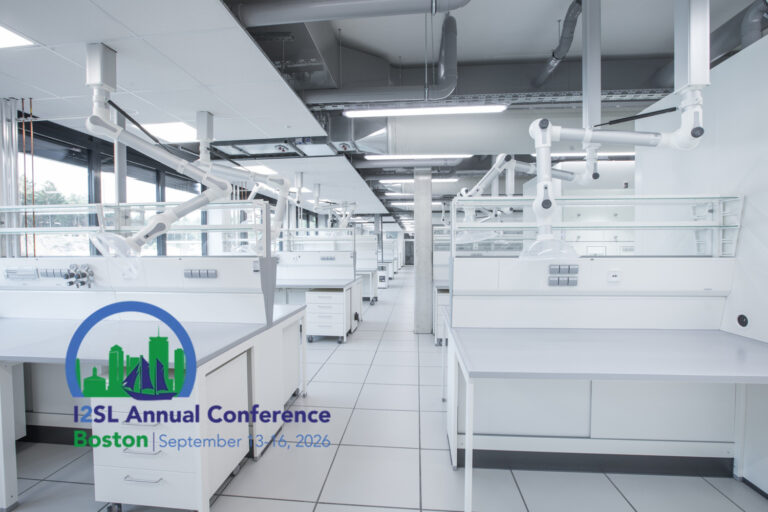
What EX means — and why it matters in extraction
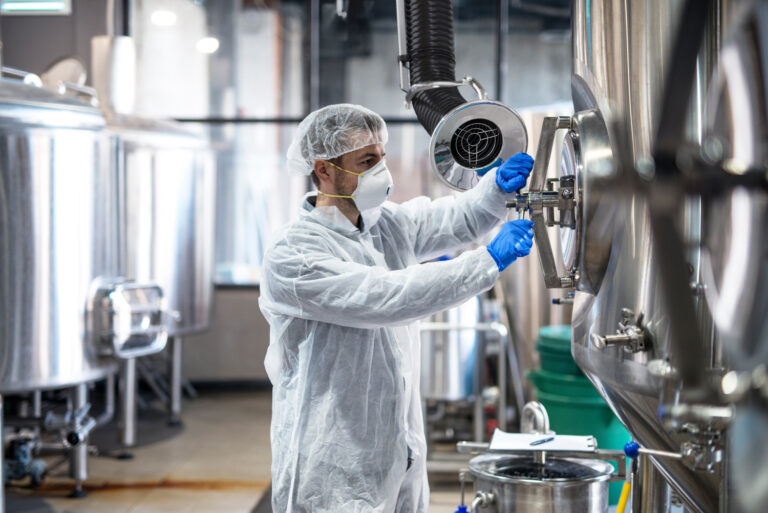
Why you need industrial source extraction
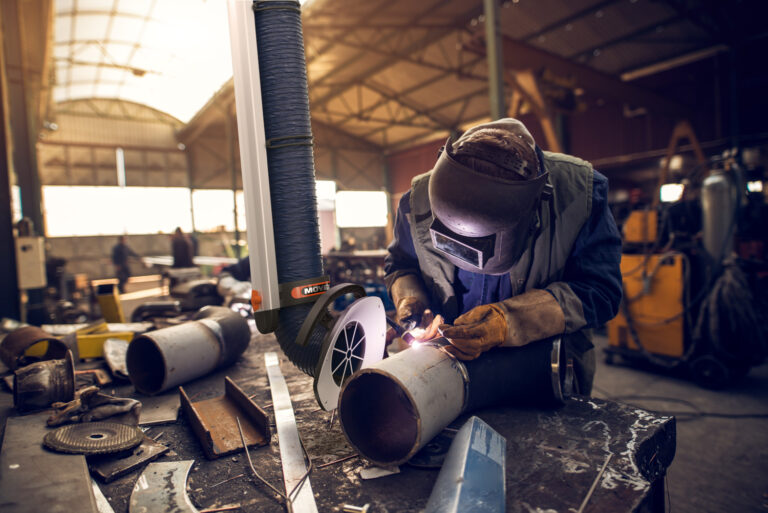
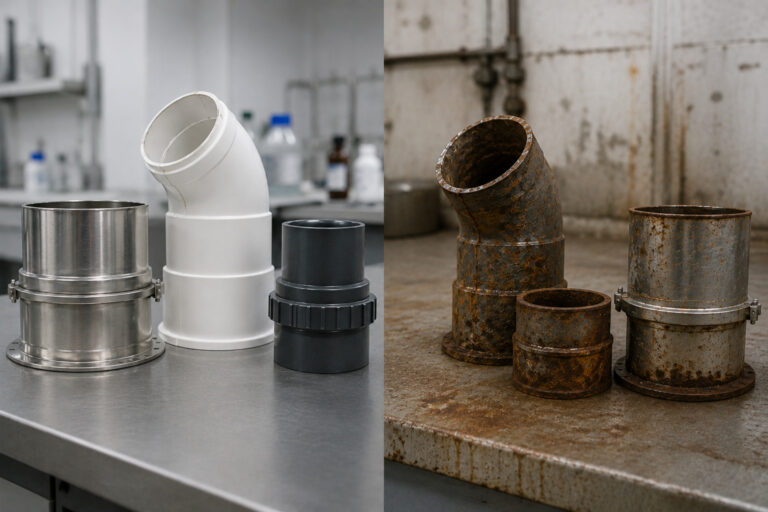
Why material selection matters in corrosive environments
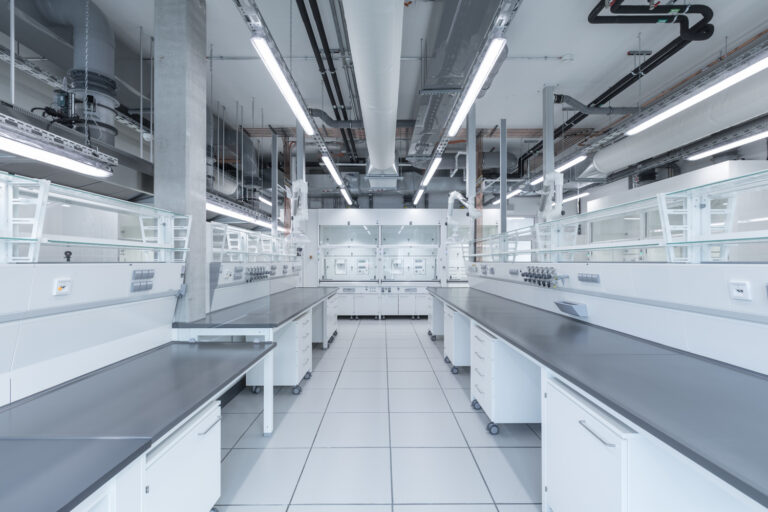
Source Extraction in Laboratories: Precision Where It Matters
Opening hours during the summer

New at Fumex GmbH – Jeaneth is already an important part of the team
When the right expertise meets the right idea: the Fumex augmented reality app
Welcome to the open house on Saturday, November 9
Jussi Minkkinen is Fumex’s new Production Manager – “I am driven by continuous improvement”

Japanese Dalton visits Fumex – focus on future cooperation
Introducing Mike Murphy – Movex’s new National Sales Manager
Opening ceremony for our new headquarters – See the pictures from the event!

Introducing Kenny Stenberg – ISO Coordinator at our parent company Fumex

Increasing the knowledge of environmental and social sustainability

Anders Hedlund takes the floor – “Trust me, there is a lot going on at Movex!”
PRX – An effective “heavy duty” extraction arm
CV – Modular filter for both particles and gas
Why local extraction is essential for vehicle exhaust and welding fumes
In many workshops, stations and service bays, air contamination is still treated as a room-ventilation issue when it is really a source-capture issue. That distinction matters. Vehicle exhaust and welding fumes are generated close to the worker’s breathing zone, often in short but repeated bursts throughout the day. Once they are allowed to spread into the room, the whole workplace becomes harder to control.
Local extraction is therefore not just about comfort. It is a practical way to reduce exposure at the point where contamination is created.
The real problem with exhaust and fumes
Vehicle exhaust and welding fumes behave differently, but they create the same challenge: they are released exactly where people work.
Exhaust leaves the tailpipe with heat and force, allowing it to rise, spread and linger unless it is captured immediately. In service bays and testing areas, exposure can occur during idling, diagnostics, warm-up and repeated start-stop cycles.
Welding fumes are even more sensitive to air movement. The plume rises quickly because it is hot, but it also shifts with posture, cross-drafts and surrounding activity. If extraction is not close enough, the fume passes straight through the welder’s breathing zone before room ventilation can do anything about it.
That is why general ventilation alone rarely solves the real problem. By the time polluted air reaches the room system, exposure has often already happened.
Why source capture works better than dilution
The principle behind local extraction is simple: capture the contaminant before it spreads.
This works better than dilution because it deals with a smaller, more concentrated air volume right at the source. Less pollution escapes into the room, air quality is easier to control, and the system becomes more predictable in day-to-day use.
This is especially important in workplaces where the task changes constantly. Mechanics move around vehicles. Welders change position and angle. Vehicles enter and leave the shops. A fixed room-ventilation rate cannot adapt well to all of this, but a properly selected local extraction solution can.
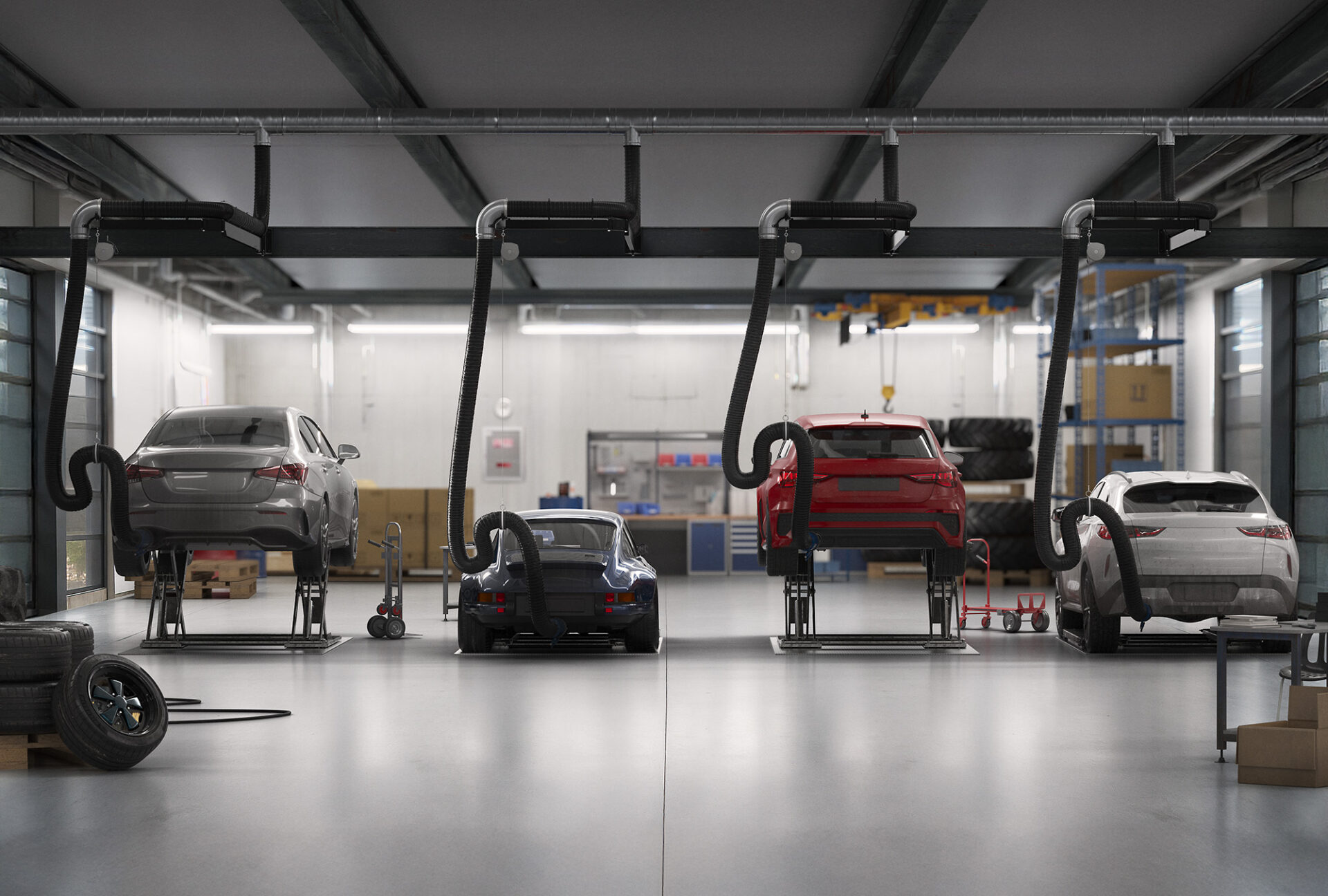
Why exhaust extraction must be local
Vehicle exhaust is one of the clearest examples of why local extraction is necessary. The source point is known: the tailpipe. That makes direct capture both practical and effective.
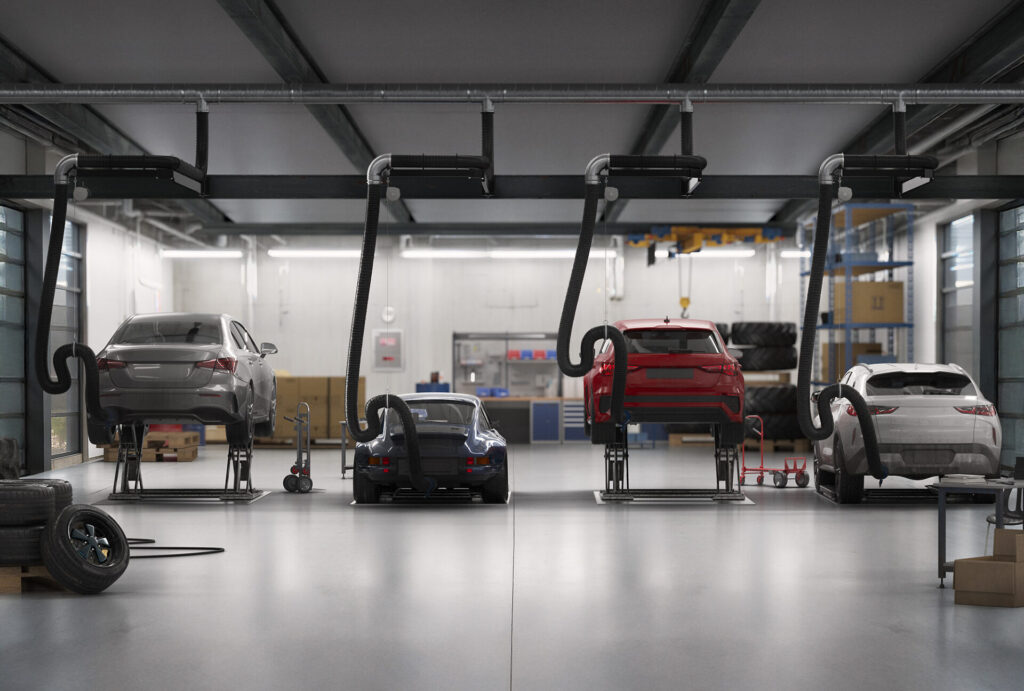
For stationary vehicles, hose-based extraction is often the most logical solution. ASE/ASEM suits workshops where vehicles stop in defined positions and exhaust must be captured directly without hoses creating clutter when not in use. ASE uses manual spring return, while ASEM is the motorised version, making it more suitable for higher mounting heights and longer hose lengths.
Where several nearby bays need to be covered from one reach area, ASA offers a different type of flexibility. Its balancer and swivel-arm design allows one unit to cover several workstations, which is valuable where access around the vehicle matters as much as direct capture.
Some vehicle may be moving during the extraction process, so the capture point must follow it. That is where the AFS rail family fits best. AFSA is suited to shorter vehicles with low-mounted exhaust pipes, AFSH to longer vehicles with low-mounted pipes, and AFSU to vehicles with high-mounted exhaust pipes. In these environments, maintaining extraction during engine start and vehicle departure is often critical, since that is when exhaust release indoors is at its highest.
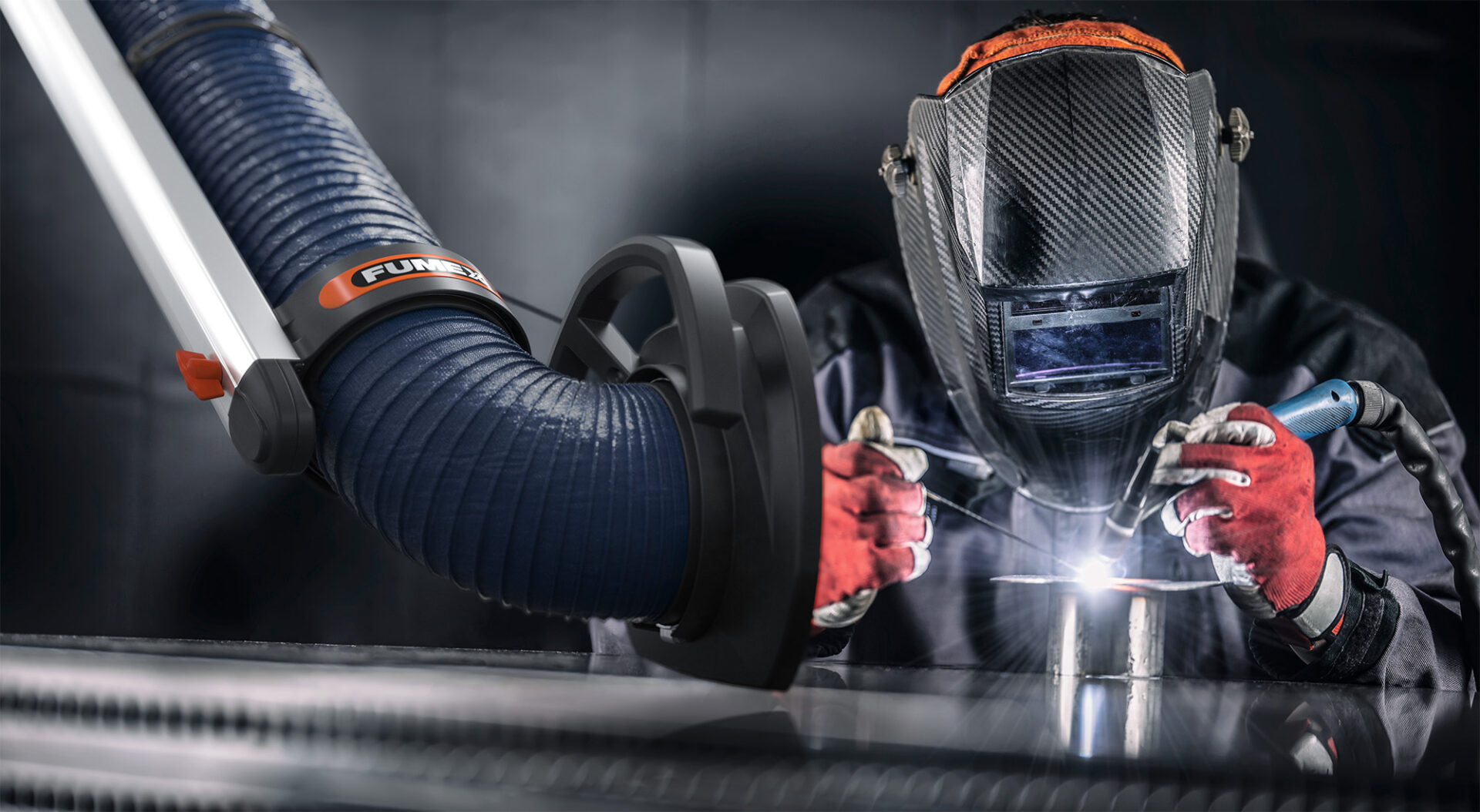
Why welding fumes demand precision
Welding fumes are more dependent on positioning than exhaust extraction. A tailpipe stays in place. A welding plume does not.
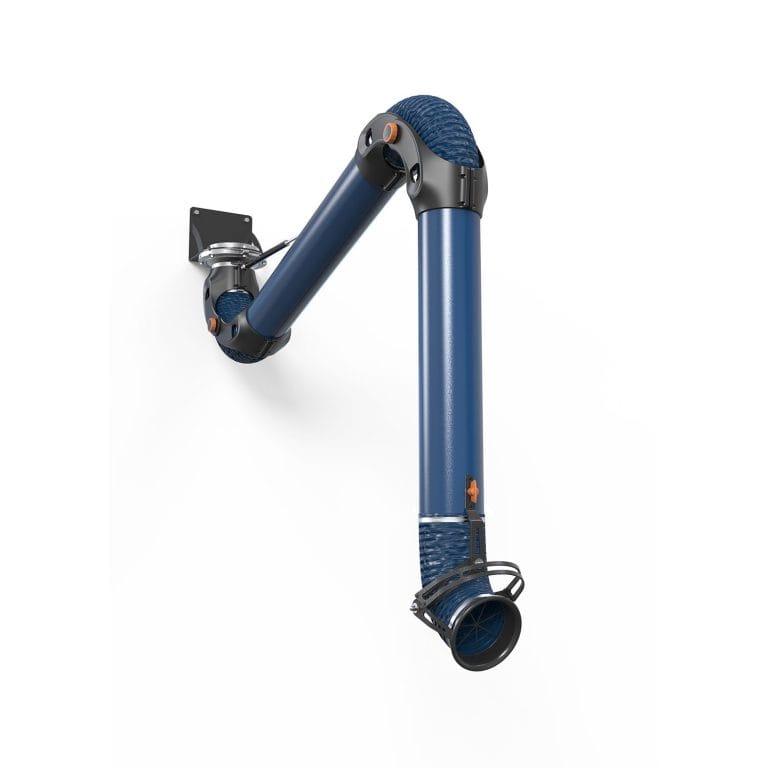
That makes extractor design especially important. If the arm is difficult to position, drifts away or creates too much resistance, it is less likely to be used correctly. PR is well suited to this kind of source capture because it combines manoeuvrability, positional stability and low pressure drop. That matters in practice, because stable positioning helps keep the hood close to the source, where it can actually capture the fume.
The same principle applies in more demanding industrial settings. PRX is a stronger choice where the environment is tougher and the extractor must withstand more intensive use. In those cases, durability is not just a product feature. It is what makes extraction reliable in everyday work.
For larger welding areas, a single wall-mounted arm is not always enough. Operators may work along long benches, large fabrications or multiple adjacent stations. In those cases, APS rail systems with PR extractors allow the capture point to move with the task instead of forcing the work to stay within one fixed radius.
Why “good enough” extraction often fails
Many extraction systems underperform not because the fan is undersized, but because the capture concept is wrong.
One common problem is distance. With welding fumes especially, performance drops quickly when the hood is left too far from the source. Another is relying on room air mixing, assuming the pollution will eventually be diluted. That may improve general air conditions while still leaving high exposure where the work is actually done.
Pressure drop is another overlooked factor. Every bend, joint and internal obstruction makes the system harder to operate and more sensitive to poor maintenance. That is why low-resistance design matters: it supports better airflow, lower noise and more reliable capture at the hood.
Ease of use matters just as much. If the system is awkward, workers will avoid it or position it badly. The most successful local extraction solutions are usually the ones that fit naturally into the workflow.